
Q4 Email Marketing 2026: The Strategy Guide for Peak Season Revenue
Every year, brands tell themselves they’ll “start Q4 prep earlier.” And every year, October arrives and the panic sets in – list hygiene untouched, flows half-built, BFCM calendar blank. In 2026, that approach will cost you more than ever. Q4 email marketing is no longer just about sending more emails in November. It’s about building a system that earns inbox placement, converts at scale, and retains customers long after the holiday rush fades.
The numbers make this non-negotiable. Email ROI averages $36 for every $1 spent – and Q4 is when that multiplier compounds hardest. But the rules have changed. Inbox providers are far stricter. AI filters are smarter. Subscribers are quicker to disengage. If your Q4 email marketing strategy looks the same as it did in 2023, you’re leaving serious revenue on the table.
This guide walks you through exactly what to do – and when – to win the most competitive email quarter of the year.
Why Q4 Email Marketing Hits Different in 2026
The inbox environment has shifted fundamentally. Gmail and Yahoo tightened authentication requirements throughout 2024–2025, and those standards have only become more enforced heading into Q4 2026. Microsoft Outlook followed with similar restrictions for bulk senders. What this means in practice: if your technical setup isn’t solid before October, your BFCM campaigns may never reach the inbox at all.
On top of that, AI-powered inbox filtering is now standard. Before a subscriber ever sees your subject line, an AI system has already evaluated your sender reputation, domain alignment, engagement history, and content quality. This is the new reality of Q4 email marketing – and it rewards brands that have been building trust all year, not just those who ramp up sends in November.
Subscriber behavior has shifted too. People now receive 50–120 emails per day on average, and 67% report feeling overwhelmed by their inbox. In Q4, that inbox pressure multiplies. Brands that send strategically – with precision segmentation and behavioral triggers – consistently outperform those that blast their entire list with generic promotions.
Build Your Q4 Email Marketing Foundation Before October
Deliverability and Authentication First
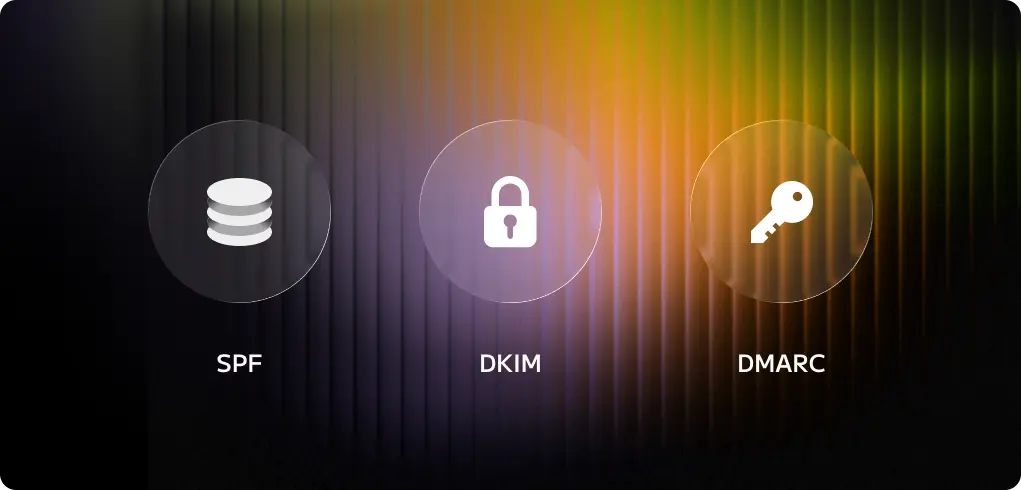
There is no Q4 email marketing strategy without a clean technical foundation. SPF, DKIM, and DMARC authentication are not optional – they are the baseline that determines whether your emails reach the inbox during peak volume. Brands that skip this step see their carefully planned BFCM campaigns throttled or sent directly to spam, no matter how good the creative is.
Beyond authentication, your sender reputation needs to be healthy before Q4 begins. Warm up your list, suppress disengaged subscribers, and monitor spam complaint rates closely. Gmail’s threshold is 0.10% – cross it consistently and your deliverability tanks right when you need it most.
For a full breakdown of what inbox providers now require, the 2026 email deliverability guide covers the current rules in detail. If you’re also dealing with Apple Mail Privacy Protection and how it affects your open rate data heading into Q4, this Gmail and Apple rules overview is worth reading before you touch your sending schedule.
List Segmentation and Cleaning
A clean, well-segmented list is the single biggest lever you have in Q4 email marketing. Sending to a stale or unengaged list during BFCM doesn’t just hurt conversions – it damages your sender reputation at the worst possible time, with effects that ripple into December and January.
Before Q4 starts, your segmentation should already be in place. That means separating engaged subscribers (opened or clicked in the last 90 days) from cold contacts, identifying high-value repeat buyers, and flagging VIP customers for early-access campaigns. Behavioral segmentation – by browse history, purchase category, and cart abandonment patterns – makes your Q4 email marketing significantly more relevant and your conversion rates measurably higher.
If you’re running on Klaviyo, the Q4 Klaviyo segments guide outlines exactly which segments to build before the season starts. And for a deeper look at why segmentation is the engine behind high-performing email programs, this email segmentation guide gives a strong strategic foundation.
The Q4 Email Marketing Calendar That Actually Converts
Pre-Black Friday Warm-Up: October to Early November
The brands that win BFCM are the ones that started warming up their audience in October. This phase of Q4 email marketing isn’t about selling – it’s about re-engagement, list qualification, and building anticipation.
Use this window to run a re-engagement campaign for dormant subscribers. Clean exits are better than dead weight on your list going into peak season. Simultaneously, start teasing your Black Friday offer to engaged segments. Early access sign-ups, “hint” campaigns, and VIP preview emails all build anticipation while telling your inbox provider that your audience is actively engaged with your sends.
October is also when your sending frequency should gradually increase – not jump suddenly from 2 emails per week to 10. Gradual ramp-up protects your sender reputation and conditions subscribers for the higher volume coming in November.
BFCM Week Playbook
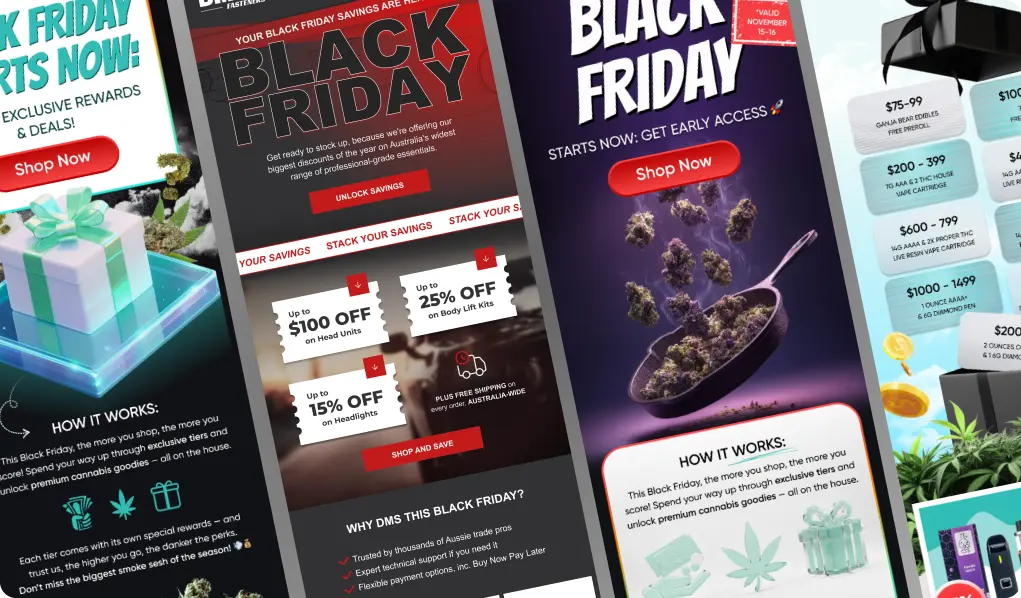
Black Friday and Cyber Monday remain the highest-revenue days in Q4 email marketing, but the window has expanded. Brands now run “Black Friday Week” campaigns that start Tuesday or Wednesday, with distinct offers and messaging for each day.
A reliable BFCM email sequence looks like this:
| Day | Objective | |
| Tuesday (pre-BF) | VIP early access | Reward loyal subscribers, drive early revenue |
| Thursday (Thanksgiving) | Deal preview / countdown | Create urgency, prime for Friday |
| Friday (Black Friday) | Main offer launch | Full list send to engaged segments |
| Saturday | ”Still going” reminder | Re-engage non-openers |
| Sunday | Last chance teaser | Build toward Cyber Monday |
| Monday (Cyber Monday) | BFCM final push | Urgency close, highlight bestsellers |
| Tuesday | Deal extension (optional) | Capture late buyers |
Deliverability during this window is where most brands get into trouble. Sending volume spikes from competitors overwhelm inbox providers, and complaint rates rise across the board. The [Black Friday email deliverability guide](https://impro.email/black-friday-email-deliverability-how-to-avoid-spam-folder-in-q4/) covers the specific steps to protect your inbox placement during the highest-risk sending period of the year.
December and Post-Holiday Retention
Most brands treat December as an afterthought after BFCM, which is a significant missed opportunity. December Q4 email marketing has two distinct phases: pre-Christmas urgency (shipping deadlines, gift guides, last-chance offers) and post-holiday retention (new customer onboarding, loyalty building, January preview).
The subscribers who bought from you during BFCM are your highest-value leads going into 2027. A well-designed post-purchase flow – delivered through December – can significantly increase repeat purchase rates before the calendar resets.
Personalization Tactics That Drive Q4 Revenue
Generic Q4 email marketing – “Happy holidays from our team!” – converts poorly in 2026. Behavioral personalization is where the revenue lives. This means emails triggered by what a subscriber has done (or not done), not just who they are.
The tactics that move the needle most in Q4:
– Browse abandonment emails triggered within 1–2 hours of a product page visit, highlighting the specific item with social proof and inventory urgency
– Cart abandonment sequences with 3 touchpoints – immediate, 24-hour, and 72-hour – each with escalating incentive or urgency
– Post-purchase cross-sell flows launched within 7 days of a BFCM purchase, recommending complementary products based on what they bought
– Predictive send-time optimization that delivers emails when each subscriber is most likely to engage, based on their historical behavior
Dynamic content blocks – where different subscribers see different product recommendations, offers, or imagery in the same email – are now table stakes for high-volume Q4 programs. The personalization gap between brands using these tactics and those still sending static campaigns is measurable in both click rates and revenue per recipient.
Q4 Email Marketing Metrics to Track (Not Open Rate)
Open rate is no longer a reliable Q4 metric. Apple Mail Privacy Protection inflates opens artificially, and AI scanning by inbox providers creates phantom opens that have nothing to do with subscriber engagement. Building your Q4 email marketing strategy around open rate in 2026 means optimizing for a number that doesn’t reflect reality.
| Metric | Why it matters in Q4 | Benchmarks |
| Click-to-open rate (CTR) | Measures content relevance vs. subject line | 10–15% healthy |
| Revenue per email | Direct ROI measure for Q4 campaigns | Track vs. prior Q4 |
| Conversion rate | Actual purchase action from email | Category-dependent |
| List growth rate | Q4 acquisition performance | Positive |
| Spam complaint rate | Deliverability health signal | Below 0.10% |
| Unsubscribe rate | Audience relevance indicator | Below 0.2% per send |
| Revenue per subscriber | List quality and monetization metric | Track trend over Q4 |
Focus especially on revenue per email and revenue per subscriber during Q4. These tell you whether your campaigns are actually working – not just getting opened.
Common Q4 Email Marketing Mistakes to Avoid
Sending to your full list on BFCM day.
This is the fastest way to spike complaint rates and damage your sender reputation right when volume and competition are highest. Send to engaged segments first; expand only if metrics hold.
Skipping the warm-up phase.
Jumping from low sending frequency in October to 10+ emails per week in November without a gradual ramp damages deliverability. Inbox providers treat sudden volume spikes as suspicious behavior.
Ignoring mobile optimization.
Over 60% of emails are opened on mobile devices. If your BFCM emails aren’t designed mobile-first – fast-loading, thumb-friendly CTAs, short subject lines – you’re losing a majority of your audience before they read a word.
Treating December as an afterthought.
Post-BFCM retention emails are among the highest-ROI sends of Q4. New customers acquired during Black Friday need onboarding flows, not silence.
Using open rate as a success metric.
For the reasons covered above, open rate misleads Q4 strategy in 2026. Measure what matters: revenue, conversions, and real engagement signals.
Ready to Build a Q4 Email Program That Actually Converts?
Q4 email marketing in 2026 rewards preparation, precision, and a solid technical foundation – not volume and hope. The brands that see the strongest BFCM results are the ones that started building their strategy in September, not October 31st.
If you want to audit your Q4 readiness, build out a BFCM flow that’s actually segmented properly, or make sure your deliverability is solid before peak season hits – let’s talk. We work with eCommerce brands specifically on email strategy, and Q4 is where we do some of our best work together.
FAQ
When should I start preparing for Q4 email marketing?
September is ideal, October is the minimum. List cleaning, segmentation, authentication audits, and flow setup all need to happen before Black Friday prep begins in earnest.
How many Q4 emails should I send during BFCM?
Engaged segments can handle daily sends during BFCM week without significant unsubscribe spikes, provided the content is relevant and offers are genuinely strong. Less-engaged segments should receive fewer touches — 2 to 3 maximum across the full BFCM period.
What’s the best Q4 email marketing strategy for a small eCommerce brand?
Focus on three things: clean your list before October, build a 5–7 email BFCM sequence with real urgency, and set up a post-purchase flow for December. These three moves alone can significantly outperform a large-list, low-segmentation approach.
How do I protect deliverability during Q4?
Authenticate your domain (SPF, DKIM, DMARC), suppress disengaged subscribers, monitor complaint rates daily during BFCM, and warm up your sending volume gradually throughout October. Never send your full list in a single BFCM blast.
What metrics actually matter for Q4 email marketing in 2026?
Revenue per email, click-to-open rate, conversion rate, and spam complaint rate. Open rate is an unreliable signal due to Apple MPP and AI scanning — don’t build your Q4 strategy around it.
Does Q4 email marketing also work for B2B brands?
Yes, but the calendar looks different. B2B Q4 email marketing typically focuses on year-end budget conversations, case studies, and partnership outreach in October–November, with December focused on relationship-building rather than direct offers.