
WhatsApp Marketing vs SMS Marketing: Key Differences, Benefits, and Use Cases
As of March 2025, WhatsApp had over 3 billion monthly active users worldwide, making it one of the most widely used messaging platforms for personal and business communication.
As an email and omnichannel marketing agency founder, I often think about WhatsApp marketing or SMS marketing — which one actually works better?
Both channels promise high open rates, fast delivery, and direct access to customers. But in practice, WhatsApp marketing and SMS marketing behave very differently, deliver different ROI, and suit different use cases.
In this article, I’ll break down WhatsApp marketing vs SMS marketing from real-world experience — not theory. I’ll explain key differences, benefits, limitations, and exactly when WhatsApp marketing outperforms SMS marketing, and when SMS still makes sense.
What Is WhatsApp Marketing?
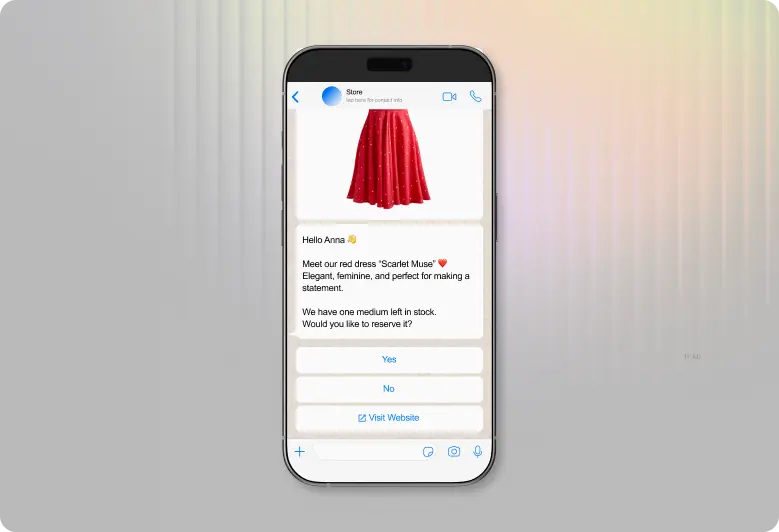
WhatsApp marketing is the use of WhatsApp Business messaging to communicate with customers through automated flows, campaigns, broadcasts, and two-way conversations.
Unlike SMS marketing, WhatsApp marketing supports rich, interactive, and conversational experiences.
With WhatsApp marketing, brands can send:
- Images, videos, GIFs
- Product cards and catalogs
- Quick reply buttons
- Order updates and transactional messages
- Automated support flows
WhatsApp marketing is permission-based, which means users must opt in — but once they do, engagement levels are consistently higher than SMS marketing.
What Is SMS Marketing?
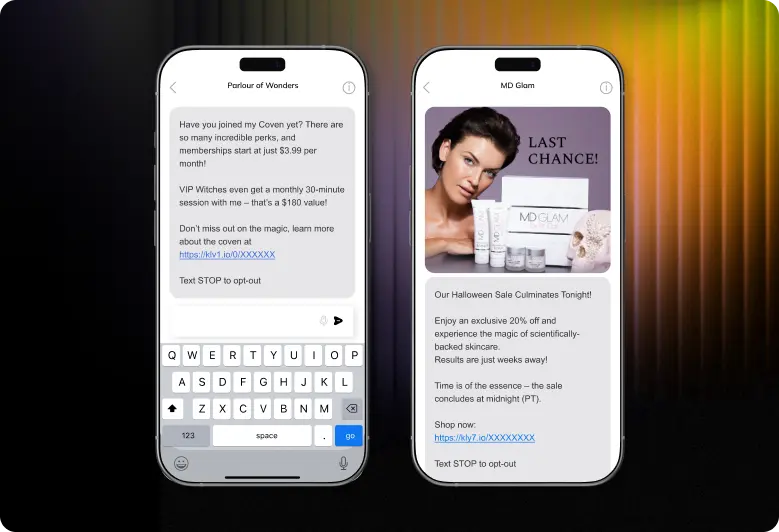
SMS marketing is a text-based communication channel used to send short promotional or transactional messages directly to a customer’s phone number.
SMS marketing is:
- Plain text (can sometimes include images as well)
- Limited number of characters (up to 160 including spaces)
- One-directional in most campaigns
- Dependent on telecom regulations and carrier filtering
While SMS marketing still delivers strong open rates (we can’t know the exact number, but statistics say it’s high), it lacks the depth and flexibility of WhatsApp marketing, especially for modern eCommerce funnels.
WhatsApp Marketing vs SMS Marketing — Core Differences
Message Format and User Experience
The biggest difference between WhatsApp marketing and SMS marketing is the user experience.
WhatsApp marketing allows:
- Rich media
- Visual storytelling
- Interactive buttons
- Conversational flows
SMS marketing is limited to text and links.
In our campaigns, WhatsApp marketing consistently feels more native, less intrusive, and more engaging than SMS marketing.
Engagement and Open Rates
Both channels boast high open rates, but WhatsApp marketing wins on engagement depth.
- SMS marketing: high opens, low interaction
- WhatsApp marketing: high opens, high interaction
Because WhatsApp marketing supports replies and buttons, users don’t just read — they act.
Trust and Brand Perception
Trust is where WhatsApp marketing clearly outperforms SMS marketing.
SMS marketing is often associated with spam. WhatsApp marketing, on the other hand:
- Requires verified business profiles
- Shows brand name and logo
- Feels like a real conversation
This makes WhatsApp marketing especially powerful for high-ticket products, subscriptions, and repeat purchases.
| Feature | WhatsApp Marketing | SMS Marketing |
| Message format | Rich media (images, videos, buttons, product cards) | Text only, sometimes images |
| Maximum message length | No strict limit | ~160 characters |
| Two-way communication | Yes (real conversations) | Limited |
| Personalization level | High (dynamic content, buttons, flows) | Low |
| Open rates | Up to 98% | Exact opens are unknown |
| Click-through rates | High (interactive CTAs) | Medium |
| Cost model | Per conversation window, per message | Per message |
| Brand trust | Verified business profiles | Often perceived as spam |
| Best use cases | Abandoned carts, support, retention, upsells | Alerts, flash sales |
| Omnichannel integration | Native with email, push, Klaviyo | Native with email, push, Klaviyo |
Cost Comparison — WhatsApp Marketing vs SMS Marketing
SMS Marketing Costs
SMS marketing costs are typically based on:
- Cost per message
- Country and carrier fees
- Delivery surcharges
As your list grows, SMS marketing becomes expensive very quickly, especially for international brands.
WhatsApp Marketing Costs
WhatsApp marketing pricing is conversation-based rather than per-message.
You pay per 24-hour conversation window if its a service message, not per message. If it’s a marketing campaign, you pay per message.
This means:
- Multiple messages sometimes cost the same as one
- Rich experiences without extra fees
- Better ROI
In most regions, WhatsApp marketing is more cost-efficient than SMS marketing at scale.
Use Cases Where WhatsApp Marketing Works Best
Abandoned Cart Recovery
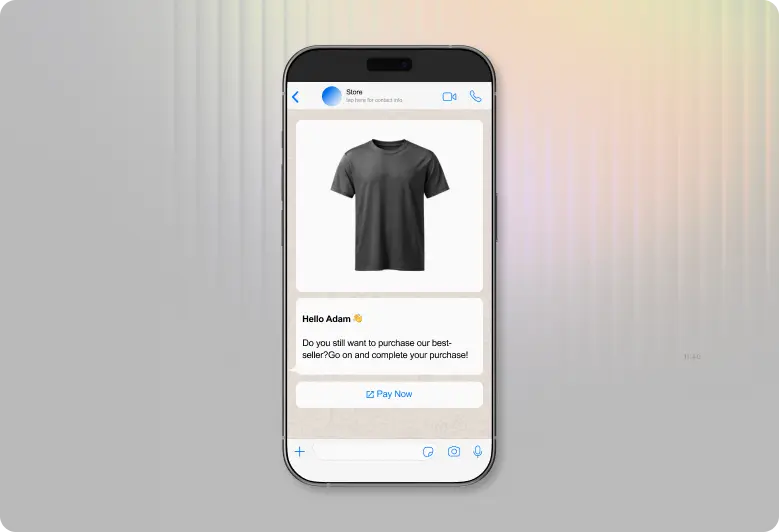
WhatsApp marketing excels at abandoned cart recovery.
Instead of a generic SMS reminder, WhatsApp marketing allows:
- Product images
- Cart summaries
- CTA buttons (“Complete Checkout”)
We often combine WhatsApp marketing with email and SMS, as explained in our omnichannel guide.
Order Updates and Transactional Messaging
Order confirmations, shipping updates, and delivery alerts perform significantly better with WhatsApp marketing.
Compared to SMS marketing:
- Messages are easier to track
- Customers can reply
- Support teams can step in instantly
Customer Support and Retention
WhatsApp marketing turns messaging into retention, not just notifications.
Two-way conversations allow:
- Faster support
- Upsells during support chats
- Higher lifetime value
SMS marketing simply cannot match this level of interaction.
Use Cases Where SMS Marketing Still Makes Sense
Despite the advantages of WhatsApp marketing, SMS marketing still has its place.
Urgent One-Time Alerts
SMS marketing works well for:
- Flash sales
- Security alerts
- Critical notifications
When speed is the only priority, SMS marketing is still reliable.
Regions with Low WhatsApp Adoption
In markets where WhatsApp usage is low, SMS marketing may outperform WhatsApp marketing — although this is becoming increasingly rare.
WhatsApp Marketing vs SMS Marketing for Revenue
From a revenue perspective, WhatsApp marketing consistently outperforms SMS marketing when used correctly.
We’ve also compared SMS vs Email revenue performance in our breakdown of messaging channels.
When WhatsApp marketing is combined with email and SMS, brands see:
- Higher conversion rates
- Lower unsubscribe rates
- Stronger customer relationships
WhatsApp Marketing and Klaviyo — A Powerful Combination
One major reason WhatsApp marketing is becoming popular so fast is its integration with Klaviyo.
With Klaviyo WhatsApp integration, brands can:
- Trigger WhatsApp marketing flows from customer behavior
- Sync profiles and events
- Build true omnichannel journeys
We’ve published a full setup guide here.
WhatsApp Marketing vs SMS Marketing — Compliance and Opt-In
Opt-In Rules for SMS Marketing
SMS marketing requires:
- Explicit consent
- Country-specific compliance
- Clear opt-out mechanisms
Violations can lead to fines or blocked numbers.
Opt-In Rules for WhatsApp Marketing
WhatsApp marketing is strictly opt-in, but:
- Consent is clearer
- Less strict rules for some niches
- Engagement is stronger
Because WhatsApp marketing requires user action, lists are smaller — but far more valuable.
Final Thoughts
If I had to summarize WhatsApp marketing vs SMS marketing in one sentence:
SMS marketing is transactional. WhatsApp marketing is relational.
SMS marketing still works for alerts and short promotions.
But WhatsApp marketing is the future of conversational ecommerce, especially for ecommerce brands that care about retention, trust, and lifetime value.
In almost every modern funnel we build, WhatsApp marketing plays a big role, supported by email and SMS, while it supports them.
FAQ
What is better: WhatsApp marketing or SMS marketing?
In most cases, WhatsApp marketing delivers higher engagement, better conversion rates, and stronger customer relationships than SMS marketing.
Is WhatsApp marketing more expensive than SMS marketing?
No. At scale, WhatsApp marketing is often more cost-effective than SMS marketing, especially for conversational flows.
Can WhatsApp marketing replace SMS marketing completely?
Not entirely. SMS marketing is still useful for urgent alerts, but WhatsApp marketing should be the primary messaging channel for most brands.
Is WhatsApp marketing compliant with GDPR?
Yes, WhatsApp marketing is GDPR-compliant when proper opt-in and data handling practices are followed.
Can I use WhatsApp marketing with Klaviyo?
Yes. WhatsApp marketing integrates seamlessly with Klaviyo, enabling advanced omnichannel automation.