
Transactional Emails: The Complete Guide to Best Practices and Deliverability
Transactional emails are one of the most overlooked — and most powerful — assets in any ecommerce or SaaS communication strategy. While marketing emails fight for attention in crowded inboxes, transactional emails are expected, opened, and trusted by default.
Yet, many brands treat transactional emails as purely functional messages and miss massive opportunities to improve user experience, build trust, and even drive incremental revenue.
In this guide, I’ll break down what transactional emails are, how they differ from marketing emails, which best practices actually matter, and how to optimize transactional emails for deliverability, performance, and scalability.
What Are Transactional Emails?
Transactional emails are automated messages triggered by a user’s action or system event. They are sent to deliver critical, expected information related to an action the recipient has already taken.
Common examples of transactional emails include:
- Order confirmations
- Shipping notifications
- Password resets
- Account verification emails
- Payment receipts
Unlike promotional campaigns, transactional emails are not optional. Users actively look for them, which is why transactional emails typically have the highest open rates of any email type.
Transactional Emails vs Marketing Emails
One of the most common mistakes I see is treating transactional emails like marketing emails — or worse, sending both from the same infrastructure without clear separation.
Transactional Emails vs Marketing Emails — Comparison Table
| Aspect | Transactional Emails | Marketing Emails |
| Trigger | User action or system event | Scheduled or campaign-based |
| Purpose | Information delivery | Promotion and engagement |
| Expected by user | Yes | No |
| Open rates | Very high | Medium |
| Legal requirements | Service-based | Requires marketing consent |
| Primary focus | Clarity and reliability | Conversion and persuasion |
Understanding this distinction is foundational to building reliable transactional emails.
Looking for email marketing that converts? Check out our related guide for more insights.
Why Transactional Emails Matter More Than You Think
Because transactional emails are opened so consistently, they play a critical role in:
- User trust
- Brand perception
- Customer experience
- Support load reduction
According to industry data, transactional emails achieve open rates of 70–85%, significantly higher than marketing emails.
That level of attention makes transactional emails too important to treat as an afterthought.
Common Types of Transactional Emails
Every brand uses transactional emails, but not all use them the same way.
Order Confirmation Emails
Order confirmation transactional emails reassure customers that their purchase was successful.
Best practices:
- Clear order summary
- Payment confirmation
- Next steps or expectations
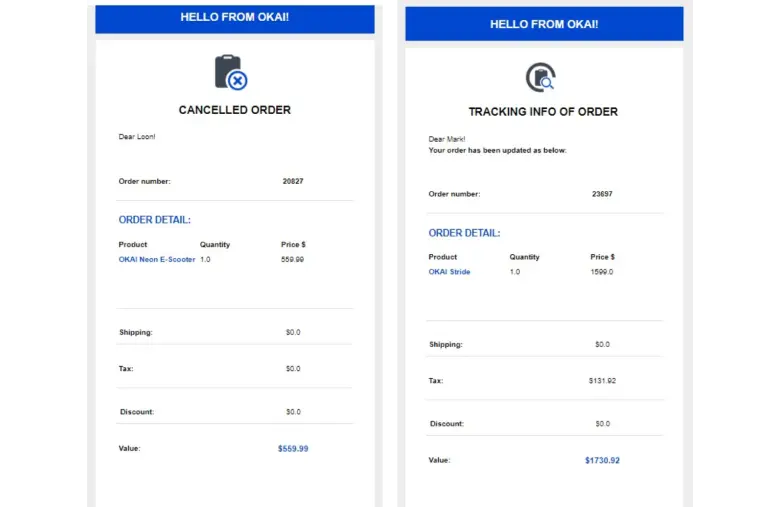
Shipping and Delivery Notifications
These transactional emails reduce support tickets more than almost any other message type.
Include:
- Tracking links
- Delivery timelines
- Contact information
Account and Security Emails
Security-related transactional emails must prioritize clarity and speed.
Examples:
- Password reset emails
- Two-factor authentication
- New device alerts
For these transactional emails, deliverability and speed are non-negotiable.
Best Practices for Transactional Emails
Designing effective transactional emails is not about being flashy — it’s about being reliable, clear, and intentional.
Keep Transactional Emails Clear and Scannable
Users don’t “read” transactional emails — they scan them.
Best practices:
- Clear subject lines
- Logical content hierarchy
- Obvious primary information
Avoid cluttering transactional emails with unnecessary copy.
Use Branding Without Over-Promoting
Transactional emails should feel on-brand, but not salesy.
What works:
- Logo and brand colors
- Consistent tone of voice
- Minimal visual distractions
What doesn’t:
- Aggressive CTAs
- Large promotional banners
Be Careful with Cross-Selling
Yes, transactional emails can support revenue — but subtly.
Safe options:
- “You may also like” sections
- Educational links
- Loyalty reminders
Transactional emails should never feel like marketing emails in disguise.
Deliverability Considerations for Transactional Emails
Deliverability is critical for transactional emails because failure equals broken user experience.
Separate Transactional and Marketing Infrastructure
I always recommend:
- Separate sending IPs
- Separate authentication setups
This protects transactional emails from marketing-related reputation issues.
Authentication Is Non-Negotiable
Every transactional email setup should include:
- SPF
- DKIM
- DMARC
Without proper authentication, transactional emails are far more likely to be delayed or blocked.
Monitor Speed and Reliability
Transactional emails must arrive instantly, not minutes later.
Key metrics to monitor:
- Time to inbox
- Bounce rates
- Error logs
Transactional Email Compliance and Consent
Transactional emails are generally exempt from marketing consent rules, but that doesn’t mean they’re unregulated.
Key principles:
- Only include necessary information
- Avoid promotional language
- Honor unsubscribe rules for mixed-content emails
When transactional emails cross into promotional territory, compliance risks increase.
Designing Transactional Emails for Scalability
As brands grow, transactional emails must scale without breaking.
Scalable Transactional Email Checklist
| Area | Recommendation |
| Templates | Modular, reusable layouts |
| Content | Dynamic variables |
| Logic | Event-based triggers |
| Monitoring | Real-time alerts |
Well-structured transactional emails reduce long-term technical debt.
Measuring Transactional Email Performance
Even though transactional emails aren’t promotional, they still need performance tracking.
Key metrics:
- Delivery rate
- Open rate
- Click rate (when applicable)
- Support ticket correlation
Transactional emails provide valuable insights into system health and user experience.
Common Mistakes with Transactional Emails
Treating Them as “Set and Forget”
Transactional emails should be reviewed regularly as products, policies, and UX evolve.
Mixing Promotions Too Aggressively
Overloading transactional emails with promotions erodes trust.
Ignoring Mobile Optimization
Most transactional emails are opened on mobile — poor formatting directly hurts usability.
My Framework for High-Quality Transactional Emails
When we audit transactional emails, we evaluate them across four dimensions:
- Reliability
- Clarity
- Brand alignment
- Technical setup
This framework ensures transactional emails support both user experience and long-term growth.
Final Thoughts
Transactional emails are not just system notifications — they are a critical part of how users experience your brand.
When built correctly, transactional emails improve trust, reduce support issues, and reinforce professionalism. When built poorly, they create friction and frustration.
If you’re serious about improving your email ecosystem, transactional emails deserve the same strategic attention as your marketing campaigns — if not more.
If you need help or a consultation, please request it here.
FAQ
What are transactional emails?
Transactional emails are automated messages triggered by a user action, such as order confirmations or password resets.
Are transactional emails different from marketing emails?
Yes. Transactional emails deliver essential information, while marketing emails focus on promotion.
Do transactional emails require user consent?
They usually do not, as long as the content is strictly transactional.
Can transactional emails include promotions?
Light, secondary content may be included, but the primary purpose must remain informational.
Why is deliverability important for transactional emails?
Because delayed or missing transactional emails directly harm user experience and trust.