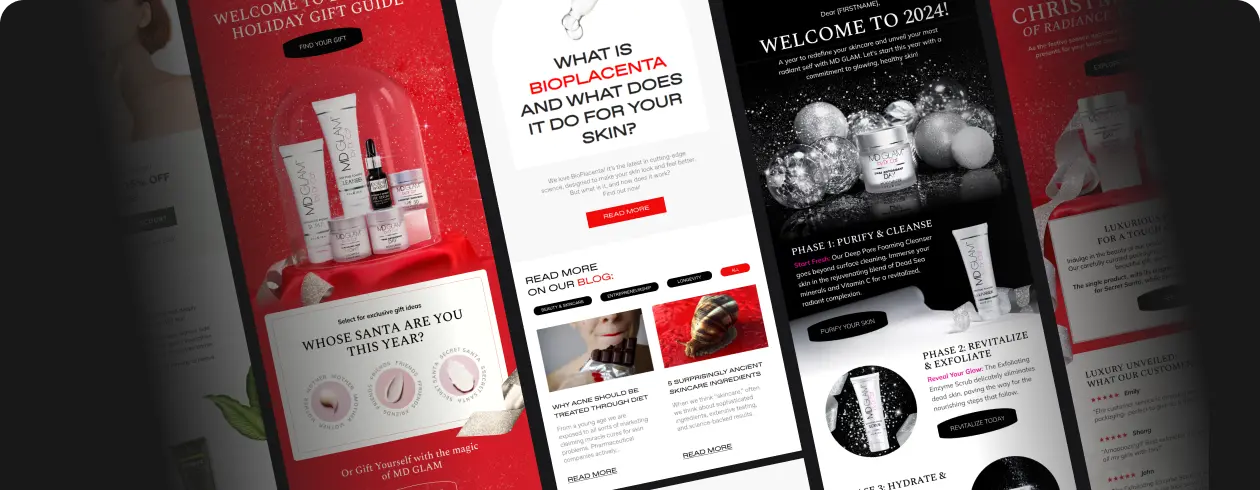
Top 7 Email Templates Every Brand Should Have in 2026
Good design is obvious. Great design is transparent.
And in email marketing, great templates are invisible — they guide the reader to act.
Most brands think performance comes from better copy or stronger discounts. In reality, structure plays a massive role. The way content is arranged determines whether someone scrolls, clicks, or drops off.
Email templates are not just layouts. They are behavioral frameworks.
When built strategically, email templates:
- Reduce production time
- Increase consistency across campaigns
- Improve visual hierarchy
- Support mobile performance
- Drive higher conversion rates
Brands that treat templates as assets — not one-off designs — scale faster and convert better.
Today, I want to break down the seven core email templates every brand should have.
Email Templates Comparison: Structure, Goal & Best Use Case
| Email Template | Primary Goal | Best For | Conversion Strength | Complexity Level |
| Dynamic Product | Drive product sales | eCommerce brands | Very High | Medium |
| Text-Only | Build trust & engagement | Founder-led & B2B brands | Medium–High | Low |
| Two-Column | Compare or showcase | Product-driven campaigns | Medium | Medium |
| One-Column | Direct conversion focus | Promotions & launches | High | Low |
| Zigzag | Storytelling & multi-product | Seasonal or collection drops | Medium–High | Medium |
| Hybrid | Cross-device performance | Scaling brands | High | High |
| Inverted Pyramid | Single CTA action | Flash sales & urgency campaigns | Very High | Low–Medium |
Notice how the highest-converting email templates are often the simplest ones. Complexity does not equal performance. Alignment between structure and objective does.
1. Dynamic Product Email Template
This template is the backbone of any serious eCommerce email strategy.
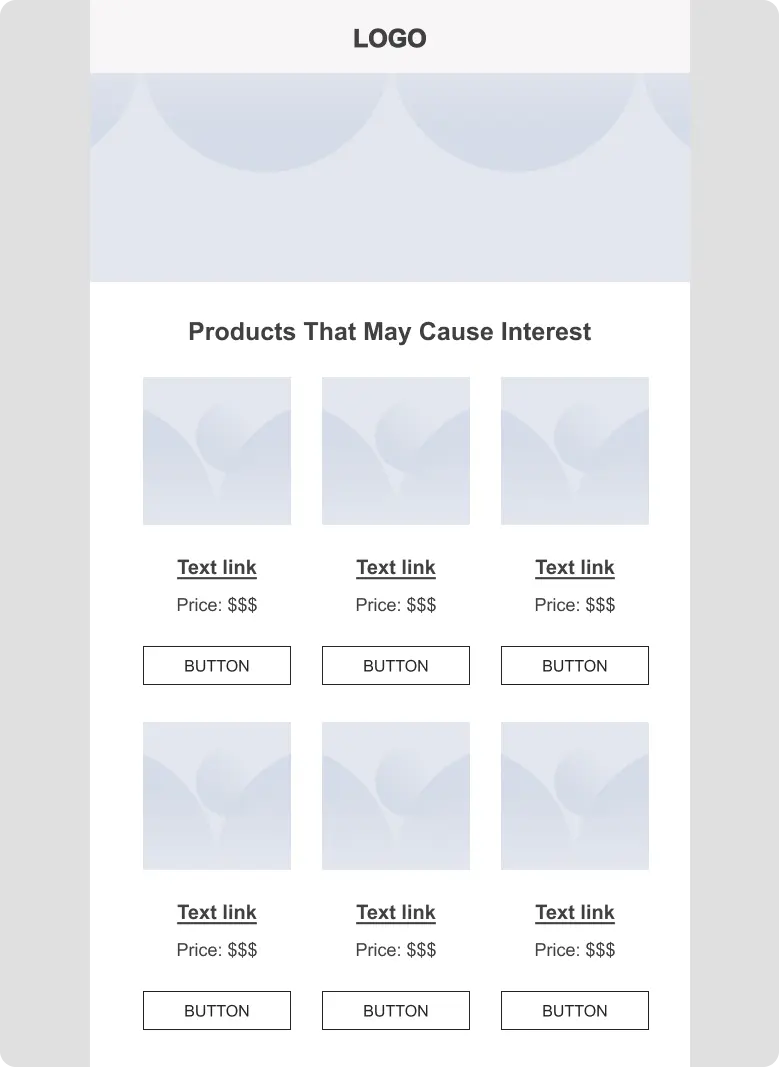
A dynamic product email template connects directly to your store or ESP and automatically pulls in real-time product data — images, titles, pricing, variants, availability, and personalized recommendations. Instead of manually rebuilding product blocks for every campaign, the structure stays consistent while the content updates dynamically.
What makes this template powerful isn’t just automation. It’s relevance.
It powers:
- Abandoned cart flows
- Browse abandonment emails
- Post-purchase cross-sells
- Back-in-stock notifications
- Personalized recommendations
When the layout is designed correctly, the product becomes the hero without overwhelming the reader. Clear hierarchy, strong CTA placement, and optimized spacing ensure the focus stays on conversion.
If your brand relies on product-driven revenue, this template is non-negotiable.
2. Text-Only Email Template
The text-only template is often underestimated — and often outperforms heavily designed emails.
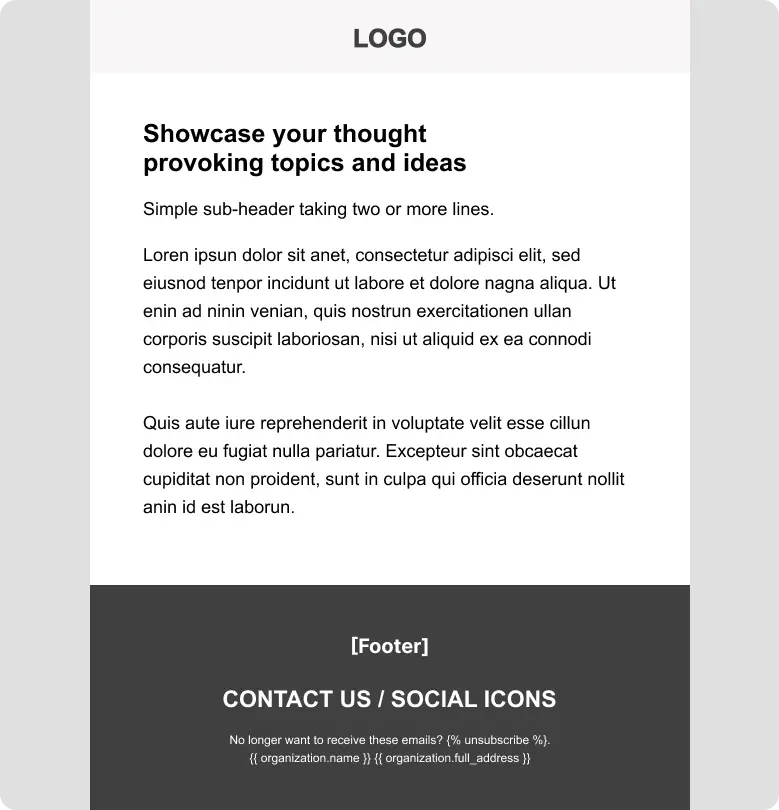
This structure removes visual noise and creates the feeling of a personal message rather than a marketing campaign. When done right, it feels like a founder, marketer, or account manager writing directly to the reader.
It works particularly well for:
- Founder updates
- Educational content
- B2B communication
- Soft launches
- Community-driven brands
- Legal & privacy actions
Because there are no distractions, the message carries more weight. Deliverability can also improve since lighter emails tend to load faster and trigger fewer rendering issues.
The key here is tone and formatting. Even a text-based email needs clear hierarchy — short paragraphs, intentional line breaks, and a strong but natural CTA.
This template builds trust. And trust converts long term.
3. Two-Column Email Template
The two-column email template introduces visual structure without overwhelming the reader.
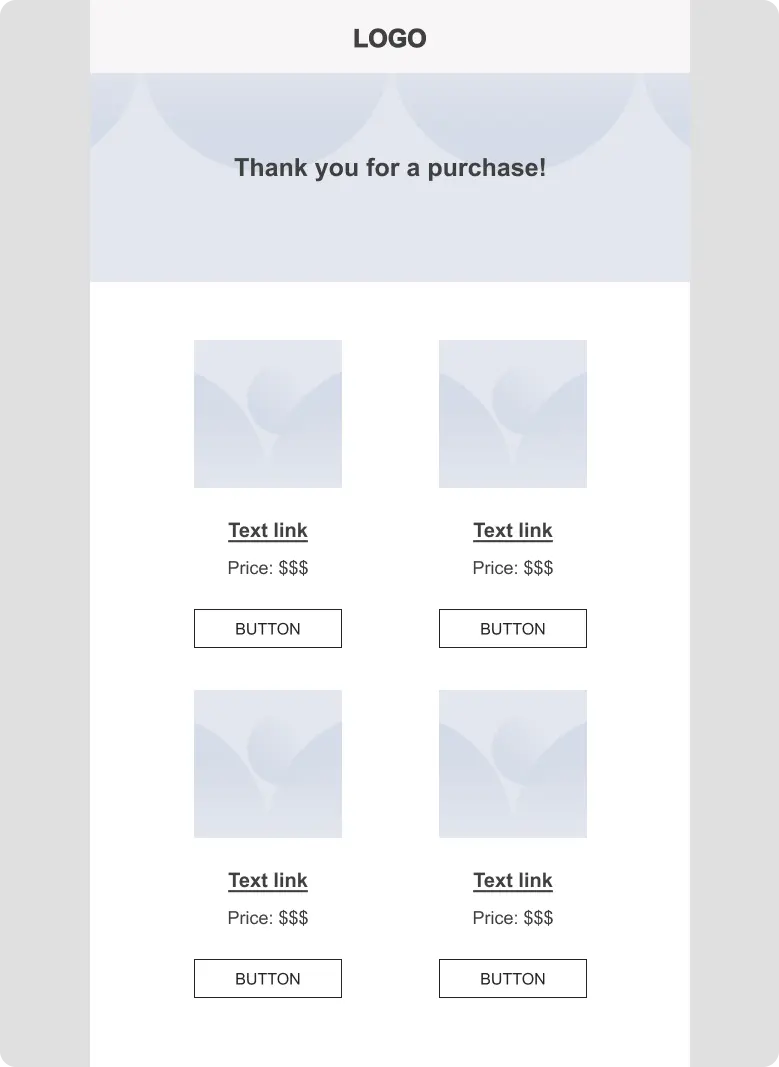
It’s ideal when you need to present parallel content — product comparisons, feature breakdowns, or category highlights. The layout allows readers to scan efficiently, especially on desktop.
However, the real test of this template is mobile adaptation. On smaller screens, columns must stack seamlessly while maintaining hierarchy. Poor stacking can break the experience entirely.
When designed correctly, this template adds balance and clarity. It prevents long vertical scrolling fatigue and creates a rhythm that keeps readers engaged.
For brands running frequent product campaigns, this is a versatile and high-performing structure.
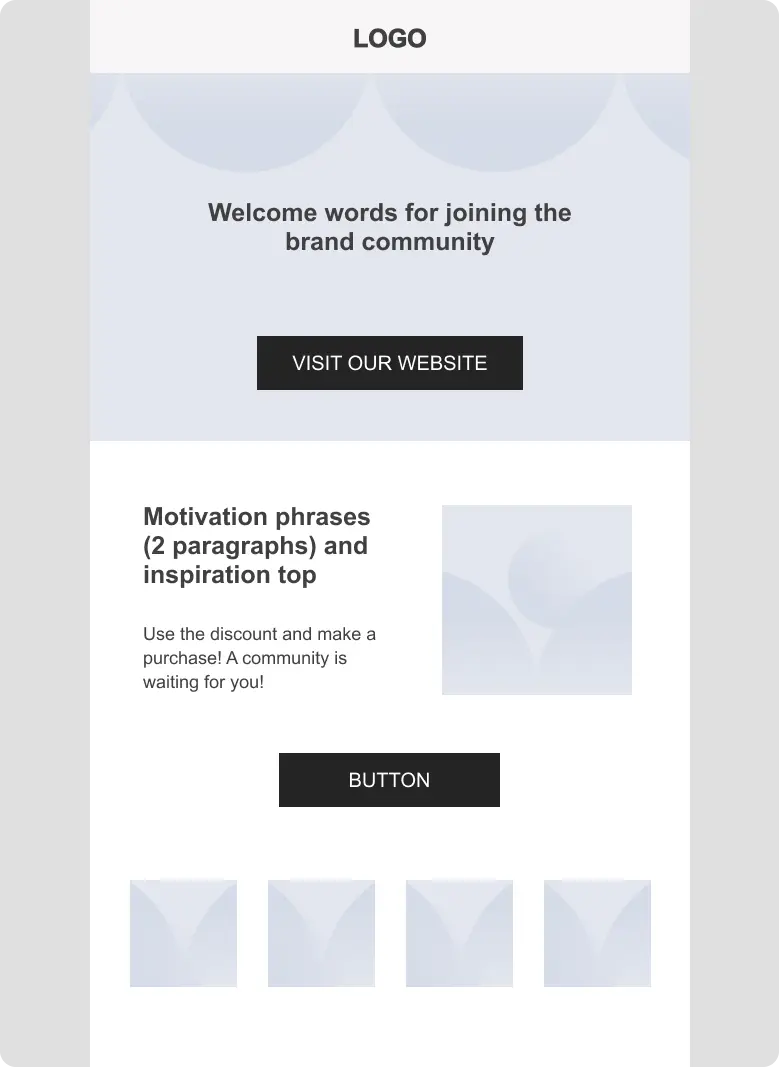
4. One-Column Email Template
If simplicity wins conversions, the one-column template is proof.
This layout follows a natural reading flow — top to bottom — making it ideal for mobile-first audiences. It removes complexity and guides the reader step by step toward a single objective.
It works extremely well for:
- Promotional campaigns
- Announcements
- Product launches
- Educational sequences
- Limited-time offers
The strength of the one-column template lies in hierarchy. Strong headline. Supporting content. Clear CTA. Enough whitespace to breathe.
In many cases, this template outperforms more complex designs simply because it reduces friction.
5. Zigzag Email Template
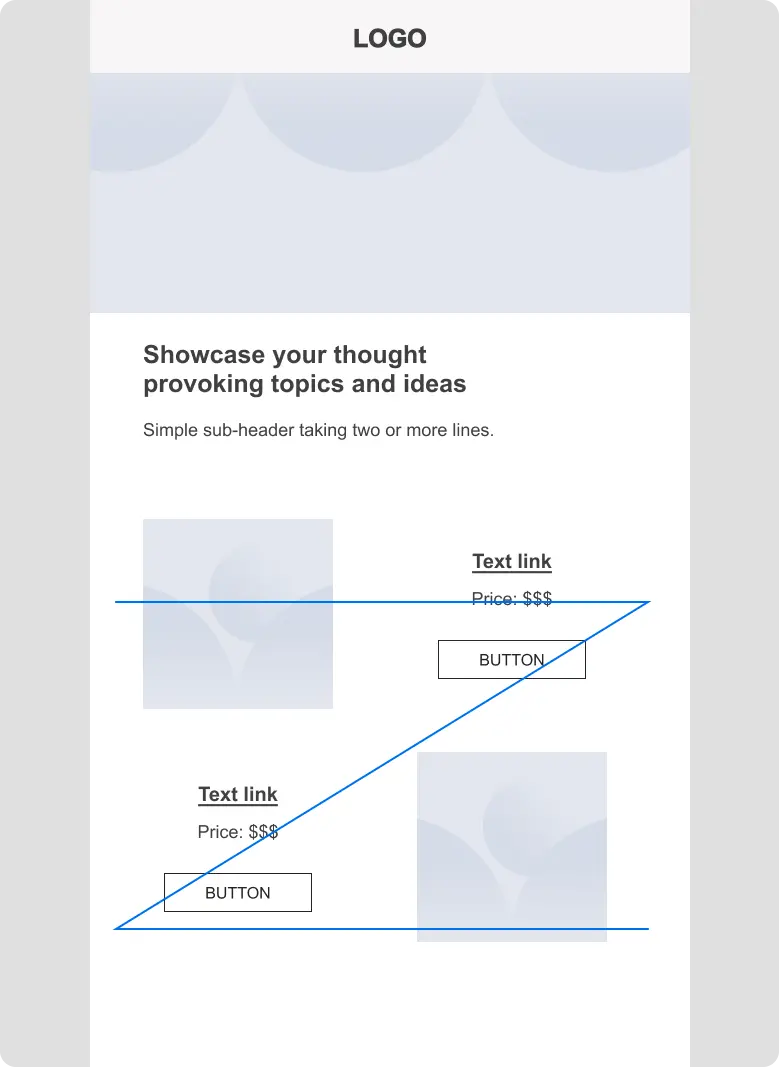
The zigzag template alternates image and text blocks from left to right, creating a dynamic visual pattern as the reader scrolls.
This structure is excellent for storytelling and multi-product presentations. Instead of stacking similar blocks repeatedly, the alternating layout keeps visual interest high and prevents fatigue.
It’s particularly effective for:
- Collection launches
- Lookbooks
- Educational product breakdowns
- Seasonal campaigns
When executed properly, the zigzag layout encourages continued scrolling. It feels curated and intentional rather than repetitive.
But spacing and alignment are critical. Without proper balance, it can quickly look chaotic. That’s why structural planning matters more than decorative design.
6. Hybrid Email Template
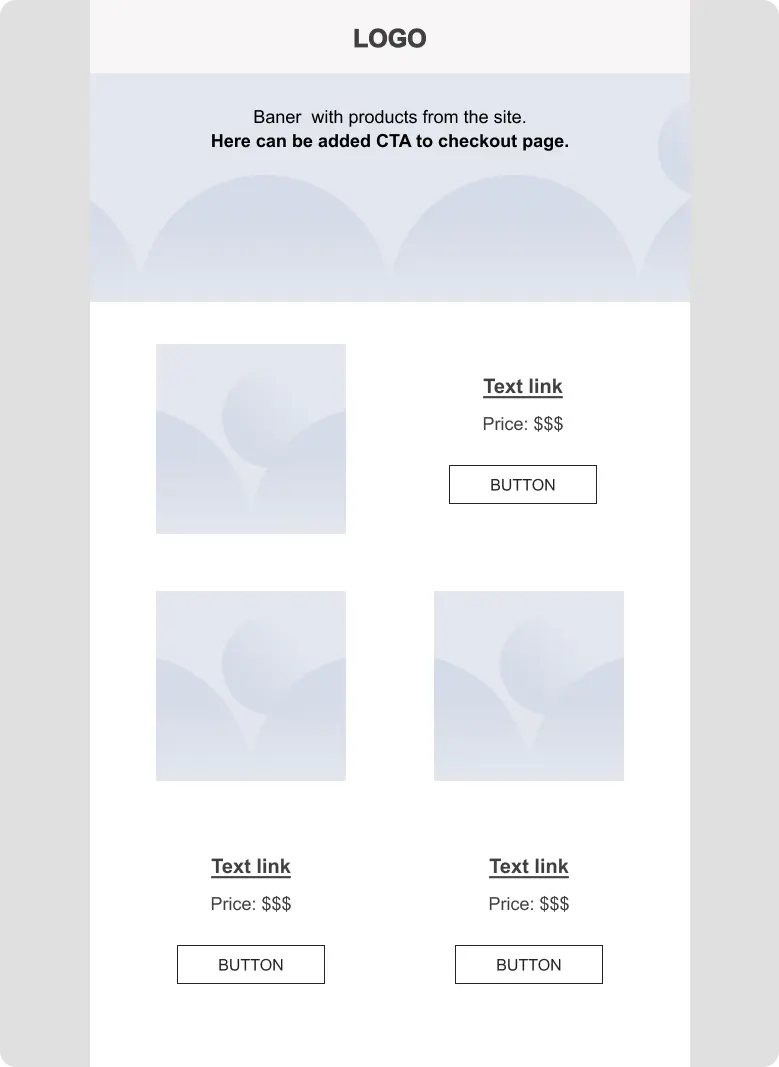
The hybrid template blends responsive design techniques to ensure optimal performance across devices and email clients.
Rather than relying on fully fluid or fully fixed layouts, it combines modular blocks with adaptive behavior. This creates flexibility while maintaining control over how elements render.
For brands sending high volumes of campaigns, this template ensures consistency across:
- Desktop
- Mobile
- Dark mode
- Various inbox providers
Hybrid structures require technical precision. But once built correctly, they become a scalable foundation for long-term campaign production.
For growing brands, this template is often where operational efficiency improves dramatically.
7. Inverted Pyramid Email Template
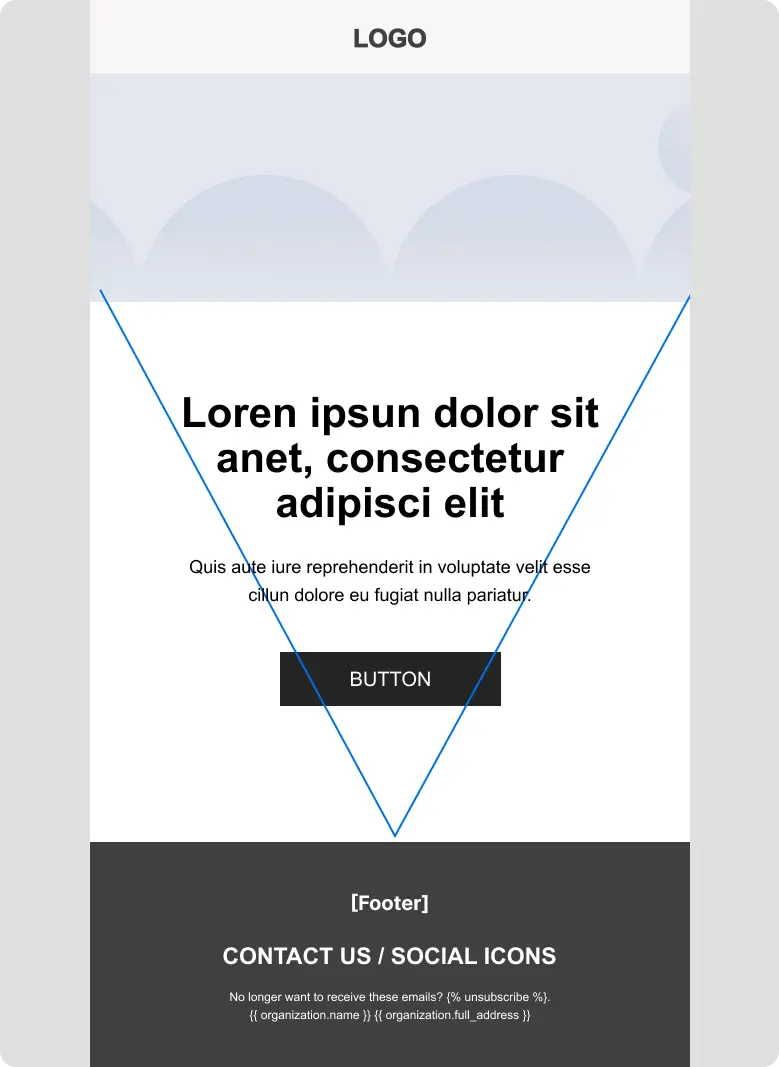
The inverted pyramid is a conversion-focused structure built around psychological flow.
It starts with a bold headline that captures attention. Supporting content narrows focus. The design then funnels attention into one dominant CTA.
Everything leads to a single action.
This template performs exceptionally well for:
- Flash sales
- Limited-time offers
- Product drops
- Major announcements
There are minimal distractions. No competing CTAs. No clutter.
When urgency and clarity are aligned, conversion rates increase.
Why Strong Email Templates Drive Revenue
Templates aren’t just about saving time.
They directly influence:
- Scroll behavior
- Click placement
- Visual clarity
- Cognitive load
- Decision-making speed
When your audience becomes familiar with your email structure, they instinctively know where to look and what to do.
That familiarity reduces friction.
Reduced friction increases conversions.
Checklist:
Before finalizing your email templates, review this checklist:
- Is the email template mobile-first?
- Does it have one dominant CTA?
- Is visual hierarchy clear within the first screen view?
- Are product blocks dynamic where needed?
- Does the template load fast across email clients?
- Is spacing optimized for readability?
- Are fonts accessible and legible on small screens?
- Is the design consistent with brand identity?
- Does the structure support scanning behavior?
- Is the template reusable across multiple campaigns?
Audit your email templates regularly and refine structure based on data.
How We Approach Email Template Systems
Instead of designing one-off emails, we build structured template systems tailored to:
- Brand positioning
- Product complexity
- Campaign frequency
- Lifecycle automation
- Mobile performance
The goal is to make them scalable and conversion-focused, and of course, pretty.
If you’re looking for help creating email templates for your business, contact our team for a professional solution.
Final Thoughts
High-performing brands don’t rely on random designs. They rely on repeatable frameworks.
The right email templates:
- Speed up production
- Maintain brand consistency
- Improve performance
- Support long-term growth
If your current structure feels inconsistent or outdated, it might not be your copy or offer that needs fixing — it might be your foundation.
And that’s exactly where strong template systems make the difference.
FAQ:
What are email templates and why are they important?
Email templates are structured layouts that define how content appears inside your campaigns. Instead of designing every email from scratch, brands use reusable email templates to maintain consistency, improve production speed, and optimize performance.
Strong email templates reduce design friction and help teams scale campaigns efficiently.
How many email templates does a brand actually need?
Most brands perform well with 5–7 core email templates.
You don’t need dozens of layouts. What you need is a structured system:
- One template for product-driven emails
- One for announcements
- One for promotional pushes
- One for educational content
- One for urgency-driven campaigns
The goal is strategic reuse.
Which email template converts best?
There is no universal “best” email template. Conversion depends on alignment between structure and objective.
However, in practice:
- Inverted pyramid email templates perform extremely well for flash sales.
- One-column email templates convert strongly for promotional campaigns.
- Dynamic product email templates dominate in eCommerce automation flows.
Structure must match intent.
Are text-only email templates still effective in 2026?
Yes — and often surprisingly effective.
Text-only email templates can improve engagement because they feel personal and direct. For founder-led brands or B2B companies, they often outperform heavily designed layouts.
Minimal structure doesn’t mean minimal strategy.
Should email templates be mobile-first?
Absolutely.
More than half of email opens happen on mobile devices. Modern email templates must prioritize vertical flow, readable typography, and tap-friendly CTAs.
If your email templates are designed desktop-first, performance will suffer.
When should you redesign your email templates?
You should consider redesigning your email templates if:
- CTR is declining
- Mobile performance is weak
- Brand identity evolved
- Campaign production feels slow
- Your emails lack visual consistency
Templates are infrastructure. When infrastructure is outdated, growth slows.
Can professional email template systems increase revenue?
Yes — when they are built strategically.
Well-structured email templates:
- Reduce friction
- Guide attention
- Improve clarity
- Increase click-through rates
- Support automation scalability
Design doesn’t drive revenue alone. But structured design absolutely influences it.