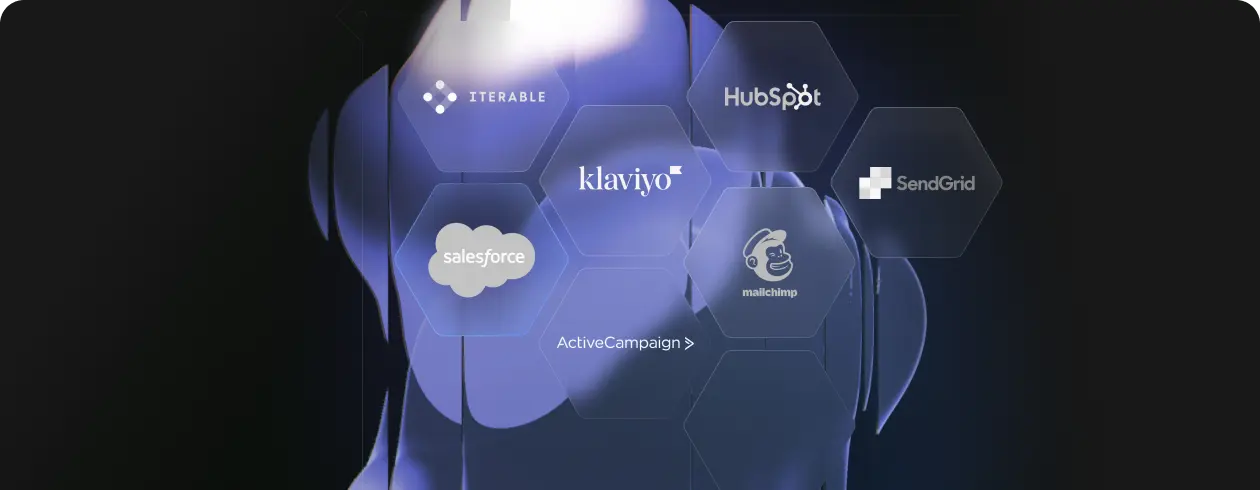
Email Marketing Tools & Software: How to Choose a Platform. Best Solutions for 2026.
“The right tool doesn’t replace strategy — it unlocks it.”
— my guiding principle when evaluating email marketing tools & software
In 2026, the landscape of email marketing tools & software is more diverse and capable than ever. Many platforms today blend email automation, AI-assisted workflows, audience insights, predictive segmentation, and true omnichannel orchestration.
Having worked with dozens of platforms over the past decade, I’ve learned that the wrong tool can cost time, data integrity, and revenue — while the right tool can transform how you communicate with your audience.
In this article, I’ll walk you through:
- How to choose the best email marketing tools & software in 2026
- What criteria matter most today
- A detailed, expert comparison of the leading platforms (features, positioning, pricing models, and ideal use cases)
Along the way, I’ll reference our previous evaluation from 2025 to highlight how the ecosystem has evolved.
What Email Marketing Tools & Software Are Today
For many brands, “email marketing tool” used to mean “to send newsletters.” That’s no longer the case.
Today, email marketing tools & software often include:
- Automated lifecycle campaigns
- AI-assisted personalization and predictive insights
- Behavioral segmentation
- Real-time analytics
- Omnichannel triggers (email + SMS + push + in-app + WhatsApp)
- API / webhooks for product data sync
- Advanced compliance & deliverability features
Choosing a platform impacts:
- how deeply you can automate
- how rich your audience insights are
- how scalable your program becomes
- how much time your team saves
How to Choose Email Marketing Tools & Software in 2026
When I evaluate platforms, I focus on six core pillars:
1. Audience Size & Business Model
Is this tool optimized for:
- Small lists (under 10k)
- Mid-market (10k–500k+)
- Enterprise (500k+)
- Transactional or lifecycle heavy
- B2B vs eCommerce focus
Some email marketing tools & software are made for volume and transactional throughput, others for deep segmentation and lifecycle orchestration.
2. Automation & Workflow Capabilities
In 2026, this is table stakes.
Good questions to ask:
- Can the platform automate complex journeys (conditional splits, multi-step events)?
- Does it support triggers based on behavior, purchase history, or external signals?
- Are there time-delay actions and re-entry rules?
3. AI & Predictive Features
AI isn’t just for subject lines anymore. Modern email marketing tools & software may offer:
- Predictive segmentation
- Propensity scoring
- Send time optimization at the individual level
- Content recommendations
Not all platforms have equal capabilities here — and that’s becoming a competitive differentiator.
4. Integration Capabilities
You need a tool that plays well with your stack:
- CRM
- Product catalog (for eCommerce)
- Event data pipelines
- Payment platforms
- Customer support systems
Look for robust APIs and native integrations.
5. Reporting & Actionable Analytics
Great analytics doesn’t just tell you what happened. It helps you answer:
- What should we try next?
- Which segment drives the best ROI?
- Which journeys need refinement?
In 2026, we expect dashboards + predictive recommendations.
6. Support, Community, and Learning Resources
The best email marketing tools & software provide:
- Live support
- Training resources
- Developer docs
- A community or partner ecosystem
This matters more as automations get more complex.
Comparison of Leading Email Marketing Tools & Software (2026)
Below is my expert comparison of top platforms shaping the email marketing tools & software landscape today.
Klaviyo
- Website: https://www.klaviyo.com
- Core Strengths: Deep eCommerce data integration, behavior-based automation, predictive analytics
- Features:
- Real-time customer profiles
- Advanced segmentation
- Predictive LTV, churn, next-best action scoring, no code
- A/B testing, dynamic content
- Integration Highlights: Shopify, BigCommerce, Salesforce Commerce Cloud, custom APIs
- Ideal For: Mid-market to enterprise eCommerce brands that leverage rich behavior data
- Pricing Model: Tiered by active contacts + usage
- Why It Matters: Klaviyo continues to evolve as a central orchestration engine for email + SMS & WhatsApp journeys with strong predictive insights.
HubSpot Marketing Hub
- Website: https://www.hubspot.com/products/marketing/email
- Core Strengths: All-in-one CRM + email + automation
- Features:
- CRM-backed lifecycle campaigns
- Predictive lead scoring
- Multi-channel orchestration
- Templates + drag-and-drop builders
- Attribution reporting
- Integration Highlights: Native CRM, plus vast ecosystem
- Ideal For: B2B, service brands, and teams seeking unified sales + marketing
- Pricing Model: Tiered plans (Free → Starter → Professional → Enterprise)
- Why It Matters: As part of a full marketing cloud, HubSpot excels where email must be deeply tied to pipeline and customer lifecycle.
Iterable
- Website: https://www.iterable.com
- Core Strengths: Cross-channel orchestration & flexible workflow engine
- Features:
- Multi-channel journeys (email, push, SMS, web)
- Event-based triggers
- AI-assisted optimization (send timing, content)
- Data unification and schema control
- Integration Highlights: CDP integration, custom data lakes, robust API
- Ideal For: Product-led brands and companies that need cohesive cross-channel messaging
- Pricing Model: Custom/usage-based tiers
- Why It Matters: Iterable’s orchestration and data flexibility make it one of the most capable email marketing tools & software for complex lifecycle flows.
Salesforce Marketing Cloud (Email Studio)
- Website: https://www.salesforce.com/products/marketing-cloud/email/
- Core Strengths: Enterprise-grade scalability, deep CRM integration
- Features:
- Advanced segmentation
- Predictive analytics (via Einstein)
- API and external data unification
- Cross-cloud orchestration
- Ideal For: Large enterprises with extensive data and multi-brand portfolios
- Pricing Model: Enterprise tiering with add-ons
- Why It Matters: Offers depth and enterprise governance that smaller platforms cannot match.
ActiveCampaign
- Website: https://www.activecampaign.com
- Core Strengths: SMB-to-mid market automation + ease of use
- Features:
- Behavioral automations
- Event tracking
- CRM + email combo
- Predictive sending
- Ideal For: Small to medium businesses seeking robust automation without enterprise complexity
- Pricing Model: Tiered plans based on contacts and features
- Why It Matters: Excellent balance of power and usability.
SendGrid (Twilio)
- Website: https://sendgrid.com
- Core Strengths: Transactional throughput + developer-friendly APIs
- Features:
- SMTP relay + REST API
- Event webhooks
- Deliverability tools
- Basic automation
- Ideal For: Technical teams with high volume transactional needs
- Pricing Model: Volume-based tiers
- Why It Matters: Best choice when email is highly transactional with developer control.
Mailchimp (2026 Evolution)
- Website: https://mailchimp.com
- Core Strengths: All-in-one small business marketing suite
- Features:
- Email builder
- Audience segmentation
- Basic automation
- Reporting dashboards
- Connected CRM and landing pages
- Ideal For: Small businesses, startups, local brands
- Pricing Model: Tiered (Free → Essentials → Standard → Premium)
- Why It Matters: Continues to be a strong starter solution with easy entry and fast onboarding.
Why Email Marketing Tools & Software Drive Competitive Advantage in 2026
In 2026, email marketing tools & software are no longer operational utilities — they are competitive infrastructure. The brands that invest in the right email marketing tools & software build stronger data ecosystems, faster experimentation cycles, and more resilient lifecycle automation.
When evaluating email marketing tools & software, I look at how the platform contributes to long-term customer intelligence. Strong email marketing tools & software unify behavioral data, purchase patterns, engagement signals, and predictive modeling in one place.
Another important factor is execution speed. The best email marketing tools & software allow teams to launch campaigns, adjust automations, and test hypotheses quickly. In fast-moving industries, your email marketing tools & software must reduce friction — not create it.
Ultimately, email marketing tools & software determine how flexible your strategy can become. If your platform limits segmentation, workflow logic, or analytics depth, your growth will plateau. Choosing scalable email marketing tools & software ensures your marketing evolves alongside your business.
Email Marketing Tools & Software — Quick Comparison
| Platform | Best For | Strength | Ideal Business Size |
| Klaviyo | eCommerce data & behavior | Predictive analytics | Mid → Enterprise |
| HubSpot | CRM-centric growth | Full-stack marketing | SMB → Enterprise |
| Iterable | Cross-channel journeys | Orchestration | Mid → Enterprise |
| Salesforce | Enterprise scale | Data unification | Enterprise |
| ActiveCampaign | Automation ease | SMB automation | SMB → Mid |
| SendGrid | Transactional volume | API-first | Technical teams |
| Mailchimp | Starter marketing | Ease of use | Small business |
Best Practices for Choosing Email Marketing Tools & Software
From my experience, these recommendations make the difference:
Start with Your Use Case
eCommerce? CRM-based workflows? Transactional email? Complex lifecycle?
Match the tool to the need — not vice versa.
Think Long Term
Choose a platform that scales with:
- audience size
- automation complexity
- cross-channel needs
What works for 10k contacts may fail at 500k.
Prioritize Flexibility Over Feature Lists
A platform with the most bells and whistles is useless if your team can’t operationalize them.
Evaluate Support & Resources
Strong documentation, developer support, and a community make adoption faster and more sustainable.
Common Misconceptions About Email Marketing Tools & Software
There’s a reason many teams buy tools before strategy. Two misconceptions remain widespread:
- Tools will fix strategy — tools support strategy.
- The cheapest tool is the best for all. There’s no one-size-fits-all.
As an email marketing specialist, I’ve always prioritized clarity before purchase — and it pays off.
Integrating With Other Channels
In 2026, email does not live alone. Top email marketing tools & software integrate seamlessly with:
- SMS and RCS messaging
- push notifications
- in-app messaging
- CRM & product data
- analytics + BI systems
This turns email from a channel into a communication ecosystem.
How to Future-Proof Your Email Marketing Tools & Software Stack
Future-proofing your email marketing tools & software means thinking beyond today’s campaign needs. In 2026, email marketing tools & software should integrate seamlessly with AI models, CDPs, CRM systems, and real-time behavioral data streams.
I recommend auditing your email marketing tools & software annually. As your audience grows, your email marketing tools & software must support larger datasets, deeper automation logic, and advanced orchestration. What worked at 50,000 contacts may not scale at 500,000.
Another factor in future-proofing email marketing tools & software is cross-channel capability. Modern email marketing tools & software increasingly coordinate with SMS, RCS, push, and in-app messaging to create cohesive journeys.
Finally, documentation and support ecosystems matter. Email marketing tools & software that invest in education, API documentation, and partner ecosystems tend to remain reliable long-term solutions.
Choosing adaptable email marketing tools & software today prevents expensive migrations tomorrow.
Final Thoughts
In 2026, email marketing tools & software are more than send engines. They are intelligence layers that inform strategy, automate journeys, and unify data.
Your choice matters — but with a clear evaluation framework and an understanding of capabilities, you can turn the right tool into a competitive advantage rather than a cost center.
If you want help evaluating tools specific to your business, I’m happy to walk through your stack and recommend a tailored shortlist.
FAQ:
What’s the difference between automation and AI in email tools?
Automation follows predefined rules, while AI anticipates outcomes and can dynamically adjust user journeys and decision paths.
Should I choose a tool based on price alone?
No — it’s better to choose based on scalability, features, and how well the platform fits your workflows.
Do all email marketing tools include SMS or push?
Not all — some platforms focus purely on email, while others offer full omnichannel messaging including SMS and push notifications.
Can I switch platforms later?
Yes, but migrations are not trivial — you’ll need to handle data export, engagement history, automations, and templates carefully.
Is AI now standard in email marketing tools?
Most leading platforms include AI features, but depth varies — advanced predictive modeling and generative capabilities are not universal.