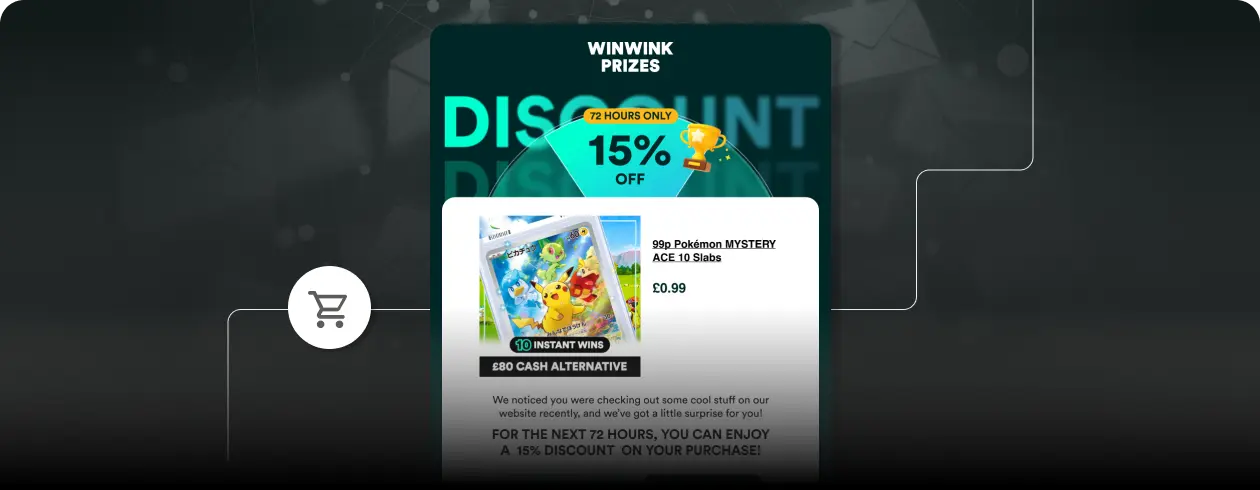
Abandoned Cart Emails: Examples, Best Practices, and How to Increase Sales
“The fortune is in the follow-up.”
— Jim Rohn
If you run an eCommerce brand and you’re not obsessing over abandoned cart emails, you’re leaving money on the table.
Every single day, customers browse your store, add products to their cart, and disappear. But here’s what many brands underestimate: abandoned cart emails are often the highest-ROI automated emails in your entire lifecycle.
And yet — most abandoned cart emails are average.
In this guide, I’ll show you:
- What makes abandoned cart emails actually convert
- Real abandoned cart emails examples
- Best practices that increase revenue
- Advanced strategies to scale abandoned cart emails in 2026
Let’s break it down.
What Are Abandoned Cart Emails?
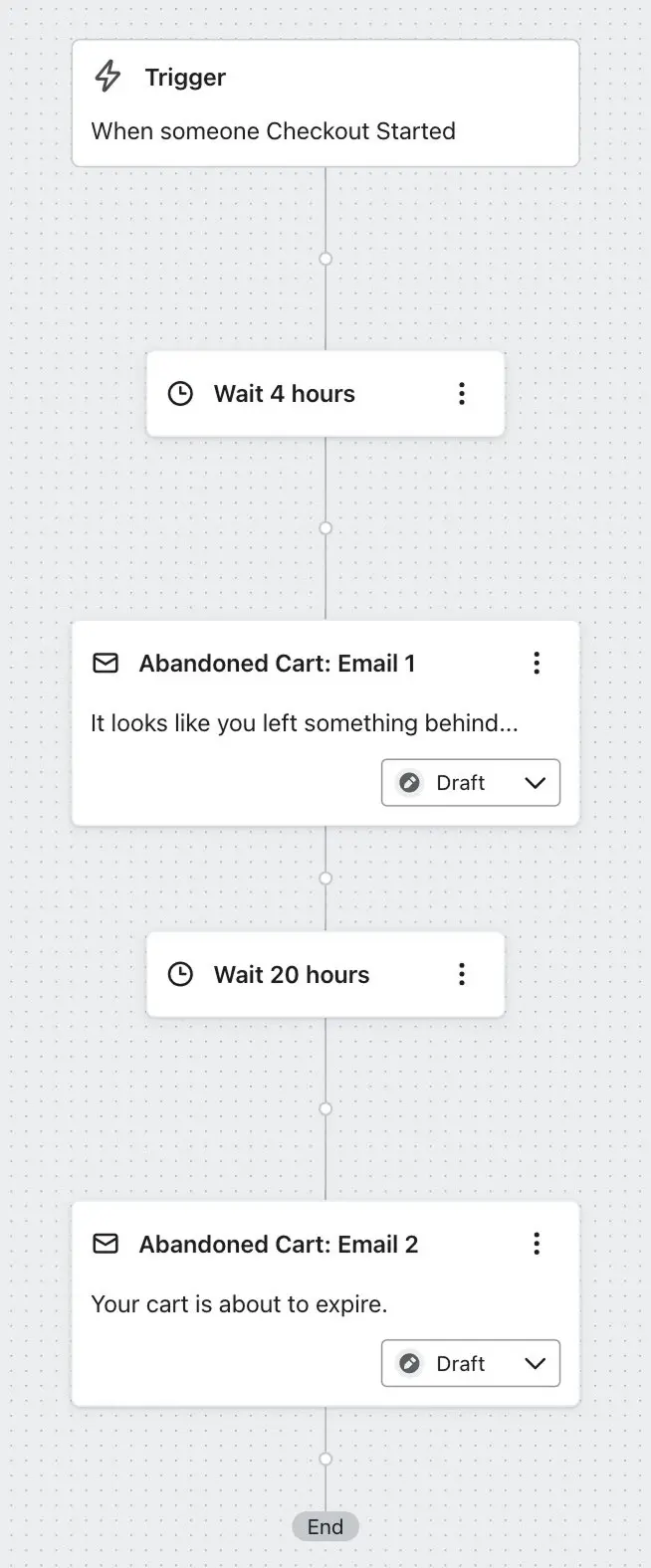
Abandoned cart emails are automated follow-up emails sent to shoppers who added products to their cart but left before completing checkout. These abandoned cart emails aim to recover lost revenue by reminding, persuading, and incentivizing customers to return and finalize their purchase.
In modern eCommerce, abandoned cart emails are behavior-triggered, personalized, and optimized for conversion across devices.
Why Abandoned Cart Emails Matter More Than You Think
According to research by the Baymard Institute, the average cart abandonment rate across industries is close to 70%. That means 7 out of 10 potential buyers leave before completing checkout.
That’s not just lost traffic — that’s recoverable revenue.
Well-optimized abandoned cart emails can recover 10–25% of otherwise lost sales. For many brands, abandoned cart emails generate 15–20% of total email revenue.
The key is understanding that abandoned cart emails are not reminders. They are persuasion systems.
Why Abandoned Cart Emails Convert So Well
Abandoned cart emails convert at a higher rate than most promotional campaigns because they target high-intent users. Unlike most other flows, abandoned cart emails reach customers who have already demonstrated buying intent.
When structured correctly, abandoned cart emails combine urgency, personalization, and trust signals — three psychological triggers that directly influence purchasing decisions.
That’s why abandoned cart emails consistently deliver some of the highest revenue per recipient in eCommerce email marketing.
The Psychology Behind High-Converting Abandoned Cart Emails
Before optimizing abandoned cart emails, you need to understand why customers leave:
- Unexpected shipping costs
- Comparison shopping
- Distraction
- Payment friction
- Hesitation
Your abandoned cart emails should address these objections subtly — not aggressively.
The difference between average abandoned cart emails and high-performing abandoned cart emails is psychological alignment.
Abandoned Cart Emails: Proven Structure That Converts
Most high-performing abandoned cart emails follow a three-step sequence.
Email 1: The Reminder (1–3 Hours Later)
Goal: Capture hot intent.
Effective abandoned cart emails at this stage:
- Show the exact product
- Keep copy concise
- Use one clear CTA
- Avoid discounts
Subject line examples:
- “Still thinking it over?”
- “Your cart is waiting”
- “Forgot something?”
The first of your abandoned cart emails should feel helpful, not pushy.
Email 2: The Persuasion Email (24 Hours Later)
Goal: Overcome hesitation.
At this stage, abandoned cart emails should include:
- Social proof
- Reviews
- Benefits recap
- FAQ snippet
Strong abandoned cart emails build trust.
Email 3: The Incentive (48–72 Hours Later)
Goal: Close the sale.
Only now consider:
- Limited discount
- Free shipping
- Time-sensitive bonus
Not all abandoned cart emails require incentives. Strategic timing matters more than aggressive discounting. Additionally, please note that the timing can vary depending on season, holidays, niche, etc. For instance, the competition for customers’ attention is so high that you can send the first email even after 20-30 minutes.
Real Abandoned Cart Emails Examples (Comparison)
| Approach | Focus | Best For | Risk |
| Reminder Only | Simplicity | Loyal audiences | Lower recovery rate |
| Social Proof | Trust | Premium brands | Needs review volume |
| Discount | Urgency | Price-sensitive segments | Margin erosion |
| Scarcity | Limited stock | Fast-selling products | Must be authentic |
The strongest abandoned cart emails combine reminder + proof before introducing urgency.
Best Practices for Abandoned Cart Emails
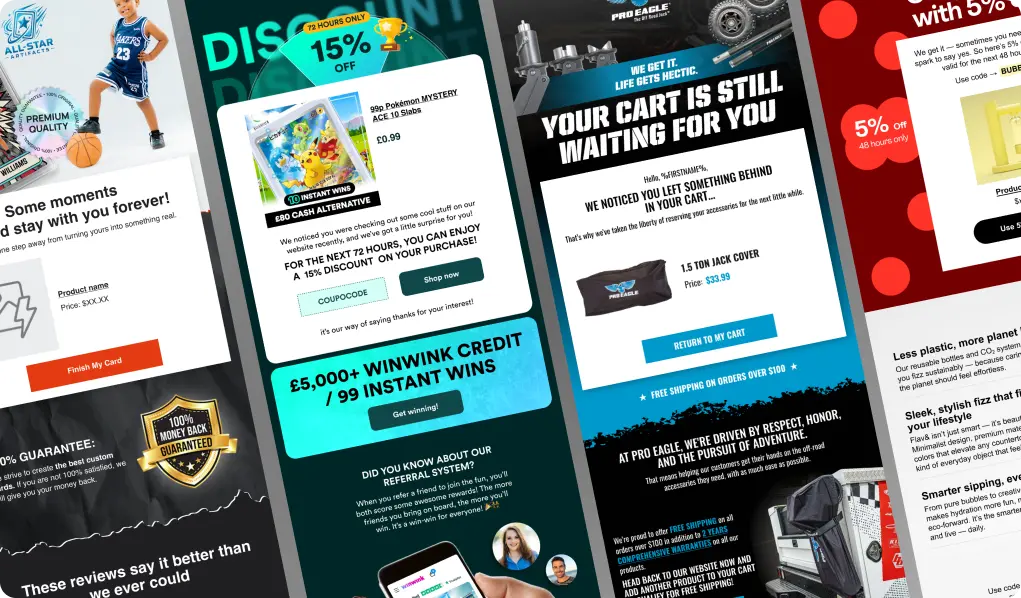
1. Use Dynamic Product Blocks
Your abandoned cart emails must dynamically display:
- Product image
- Variant
- Price
- Direct checkout link
Modern abandoned cart emails rely on automation and personalization.
2. Optimize Timing
Recommended timing for abandoned cart emails:
- Email 1: 1–3 hours
- Email 2: 24 hours
- Email 3: 48–72 hours
Test continuously — abandoned cart emails performance varies by audience and season.
3. Use Clear, Action-Driven CTAs
Every abandoned cart email message needs:
- One dominant CTA
- Strong contrast
- Action-focused wording
“Return to Cart” often outperforms generic buttons.
4. Prioritize Mobile Optimization
Over 60% of abandoned cart emails are opened on mobile.
Make sure:
- Buttons are thumb-friendly
- Layout is simple
- Images load fast
5. Combine Email With Other Channels
In 2026, abandoned cart emails shouldn’t exist in isolation.
I often layer:
- Email reminder
- SMS follow-up
- Push notification
- WhatsApp reminder
If your abandoned cart emails aren’t converting as expected, I recommend reading this detailed breakdown.
It expands on optimization gaps I frequently see in abandoned cart emails.
Advanced Strategies to Increase Revenue from Abandoned Cart Emails
Segment by Cart Value
High AOV shoppers may justify stronger incentives for abandoned cart emails.
Lower-value carts may convert with reminder-driven abandoned cart emails.
Personalize by Category
Different categories require different messaging inside abandoned cart emails.
Beauty, electronics, fashion — each requires tailored persuasion angles.
How to Scale Abandoned Cart Emails Without Increasing Ad Spend
Scaling abandoned cart emails means optimizing structure, segmentation, and personalization.
High-performing abandoned cart emails can recover 15–25% of lost revenue when refined consistently.
To scale abandoned cart emails:
- Test subject lines aggressively
- Segment by customer lifetime value
- Use dynamic urgency
- Integrate predictive timing
Treat abandoned cart emails as a revenue system — not just an automation.
Abandoned Cart Emails Optimization Checklist for 2026
Use this checklist to evaluate your abandoned cart emails:
- Trigger first abandoned cart emails within 1–3 hours
- Include dynamic product data in abandoned cart emails
- Add social proof in the second abandoned cart emails
- Introduce an incentive only if needed in the final abandoned cart emails
- Optimize abandoned cart emails for a mobile-first experience
- Test subject lines across all abandoned cart emails
- Track revenue per recipient from abandoned cart emails
- Align abandoned cart emails with SMS, push notifications or WhatsApp messages
Brands that consistently optimize abandoned cart emails see measurable revenue growth.
Final Thoughts
If you’re serious about eCommerce growth, abandoned cart emails must be a core revenue driver — not an afterthought.
Well-structured abandoned cart emails:
- Recover lost revenue
- Increase AOV
- Strengthen trust
- Improve lifecycle performance
The difference between average abandoned cart emails and high-performing abandoned cart emails isn’t luck.
It’s psychology, structure, timing, and consistent optimization.
FAQ:
How many abandoned cart emails should I send?
Most brands perform best with 2–3 abandoned cart emails.
Should abandoned cart emails include discounts?
Not always. Test before adding incentives to abandoned cart emails.
What’s the ideal timing?
The first abandoned cart email should go out within 1–3 hours.
Are abandoned cart emails still effective in 2026?
Yes. Abandoned cart emails remain one of the highest ROI email automations in eCommerce.
Can abandoned cart emails work without personalization?
Basic abandoned cart emails can work, but personalized abandoned cart emails convert significantly better.